Key points
- Breastfeeding has many benefits for both parent and child.
- It is recommended to exclusively breastfeed for the first six months if you can, then continue breastfeeding alongside solid foods. If you cannot breastfeed exclusively, any amount of breastmilk is better than none.
- Learning to breastfeed takes time and practice.
- It is best to breastfeed your baby when they show signs of hunger; you do not need to follow a strict feeding schedule.
- You will know if your baby is drinking enough milk if they have regular wet nappies, seem generally well, and are gaining weight.
- Breastfeeding is not always easy, but support is available. You do not have to manage the challenges of breastfeeding on your own.
About breastfeeding
Breastfeeding is a natural way to feed your baby. It has many benefits for both parent and child, and is a great way to connect. Breastmilk is perfectly suited to your baby’s needs; its nutrients change as they grow older. Feeding your baby any amount
of breastmilk is better than none.
When you breastfeed, your baby can see, feel and smell you. This helps you both to form a strong bond. Many people find breastfeeding to be enjoyable and convenient once they gain confidence.
Breastfeeding is not always easy, but support is available to help. You do not have to manage the challenges alone. Specialists like lactation consultants and Maternal and Child Health Nurses can all share advice on topics like technique and milk supply.
You could also speak with your doctor.
Benefits of breastfeeding
Breastmilk naturally contains the right nutrients to help your baby grow and thrive. It is easy for them to digest, and includes special proteins called ‘antibodies’ that help protect them from disease and infection.
If your baby is fully breastfed, they will not need any other food or drink until they are about six months old.
On top of this, breastmilk also:
- Supports the gut and brain
- Helps your baby’s mouth, teeth, and jaw to grow, and improves long-term physical development
- Lowers the risk of many conditions, such as ear infections, respiratory (breathing) infections, allergies, and asthma.
Any amount of breastmilk will help your baby’s overall health and development.
Breastfeeding your baby
Positioning and attachment
Breastfeeding takes time and practice. Remember, you and your baby are learning a new skill together.
- Positioning is how you align your body with your baby’s body so they can feed.
- There are many different breastfeeding positions – from sitting down to reclining (leaning back), and lying on your side.
- You may need to try a few positions before you work out what is best for you and your baby.
- Make sure you are comfortable while feeding. It may help to support your body with pillows or cushions.
- Attachment (or latching) is how your baby takes the breast into their mouth to feed.
- A good attachment will help the milk flow easily from your breast into your baby’s mouth.
- Their mouth should be wide open while feeding and they should have a large mouthful of breast tissue, not just the nipple.
- Without a proper attachment, feeding may be painful, and your baby may not drink enough milk. You also may not make enough milk to meet their needs.
How to breastfeed your baby
- Get into a comfortable feeding position. Holding your baby close to you on your chest can be a great way to get them interested in breastfeeding and calm them if they are upset.
a. Your baby may search for the breast on their own or need your
help to find the breast and start feeding.
- If you need to, guide your baby to the breast and support them from behind their back and shoulders.
a. Try not to hold their head; they may find this uncomfortable and prefer to move freely.
b. Your baby’s chest and tummy should be against your body, and they should face directly towards the breast, rather than turning their head to the side to feed.
- Let your baby open their mouth wide and attach to the breast. They should have a mouthful of breast tissue.
a. When they have a good attachment, their chin and cheeks should be touching the breast, and there should be a little bit of space
around their nose.
- Your baby will usually start feeding with a short period of rapid sucking. Once the milk starts flowing, they should settle into a more rhythmic suck and swallow pattern.
- Continue feeding until your baby shows signs they have finished.
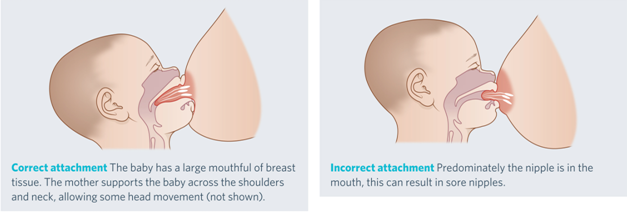
Figure one: Illustration showing correct and incorrect attachment.
If you have trouble breastfeeding or experience any pain, speak with a lactation consultant or your Maternal and Child Health Nurse.
How much and how often should I breastfeed my baby?
You should breastfeed your baby whenever they seem hungry. There is no set number of feeds they need each day. Young babies breastfeed more often – around eight to 12 times a day, or roughly every two to four hours. This is not always due to hunger; breastfeeding
can help to comfort your baby or soothe them when they are upset.
In the first few weeks of your baby’s life, breastfeeding may take up to one hour. As they grow and your milk volume increases, they will feed faster and less often.
It is best to follow your baby’s hunger cues. Signs your baby is hungry may include:
- Turning their head from side to side
- Opening their mouth
- Poking their tongue out
- Bringing their hands to their mouth
- Crying.
Your baby is getting enough breastmilk if they:
- seem generally alert and content when awake
- are gaining weight
- have regular wet nappies
- their nappies should feel wet, with clear or pale yellow urine (pee).
If your baby is sick or the weather is hot, they may want to feed more often.
When your baby starts eating solid foods, they will also slowly want less breastmilk each day.
You should speak with your Maternal and Child Health Nurse if you are worried about your baby’s feeding or their growth and development.
Expressing and storing breastmilk
Expressing breastmilk is when you manually get milk from your breasts. Some people call this ‘pumping.’ You can express breastmilk using your hands manually, or with a breast pump.
You may want or need to express breastmilk. For example, if you are going back to work while still breastfeeding, or your baby is in hospital and cannot breastfeed.
You can safely store expressed breastmilk in the fridge for three days, and in a freezer for three months.
Common problems with breastfeeding
Too much milk
In the early weeks of breastfeeding, it is common for your breasts to feel very full and leak a lot. This will usually settle as your body adjusts to how much milk your baby needs.
Sometimes, you may need to express a small amount of milk to help soften your breasts. Try not to express a lot of milk though, as your body will take this as a sign to keep making more.
You can speak with a lactation consultant or Maternal and Child Health Nurse for advice.
Not enough milk
Breastmilk production works on ‘supply and demand’ – that is, the more you feed, the more your body should make. Most people make the amount of milk their baby needs.
If you feel you are not making enough milk, some ways to increase your breastmilk supply include:
- Holding your baby close against the skin on your chest – usually with no clothes in between.
- This is called ‘skin-to-skin’ or ‘kangaroo care.’
- Skin-to-skin prompts your body to release hormones that help with milk production.
- Ensuring your baby is positioned and attached properly at each feed.
- Breastfeeding more often can help tell your body to make more milk – around every two to three hours if your baby is interested.
- Offering each breast twice during a feed, swapping when the flow of the milk slows down, and your baby is not swallowing much anymore.
- This is sometimes called 'switch feeding.'
- Gently compressing or massaging your breasts while breastfeeding or expressing.
- Expressing after breastfeeding.
If your supply is low and these strategies do not seem to be helping, it is best to speak with your Maternal and Child Health Nurse, lactation consultant, or your doctor. Sometimes, doctors prescribe medicines to increase milk supply.
Mastitis
Mastitis is when your breast gets inflamed. There are many factors that can contribute to mastitis, including having too much milk or long gaps between feeds.
Often, mastitis starts with redness, pain, and swelling in your breast. You may also have a fever (temperature of 38°C or more) or flu-like symptoms such as feeling hot and then cold.
You can usually care for mastitis at home by reducing the inflammation, such as putting cold packs on your breast or taking anti-inflammatory medicines like ibuprofen. If you can, you should try to breastfeed as normal.
Speak with your doctor if you do not start feeling better after 12 to 24 hours, or if you feel very unwell. Sometimes, breastfeeding people need antibiotics to treat mastitis.
Important things to remember when breastfeeding
- Feed your baby when they show signs of hunger. It is better to let your baby guide feeding times, rather than following a set schedule.
- Breastfeeding is a great time to bond with your baby. Holding them close, talking to them, and making eye contact will make feeding time more enjoyable for both of you.
- You may feel some pain as your baby attaches when you first start breastfeeding. However, breastfeeding should not continue to hurt.
- Speak to your Maternal and Child Health Nurse or lactation consultant if you are regularly feeling pain. Getting help with your baby’s attachment often fixes any pain.
- Regular feeding helps your body make enough milk to meet your baby’s needs.
- Allow your baby to finish feeding on one breast before offering the other breast.
- There is no need to time or limit each feed – your baby will drink the amount of milk they need.
- If your baby is crying, they may find it hard to feed.
- Sometimes, it can help to calm them first before offering the breast.
Common questions about breastfeeding
Should I stop giving my baby breastmilk when they start solids?
Your baby should continue having breastmilk until at least 12 months old, and beyond that for as long as you and your baby want. Even after introducing solid foods, breastmilk should still be their main source of nutrition for their first 12 months
of life.
Is it true that I should offer formula or solid foods alongside breastmilk to fill my baby up?
You do not need to give your baby formula or solid foods alongside breastmilk to fill them up. Breastmilk alone is enough to keep them fed and nourished in the first 6 months of life, as long as you do not have any issues with milk supply. Feeding
your baby formula or solids on top of their usual breastfeeds will not keep them fuller for longer or improve their sleep.
It is best to introduce
solid foods gradually from about six months old, when your baby shows signs they are ready. However, breastmilk will continue to be their main source of nutrition until around 12 months old as they get used to solids.
What is colostrum?
Colostrum is the first milk the body makes, starting in pregnancy. It is thick, sticky, and usually more yellow than regular breastmilk. Colostrum is rich in antibodies that support your baby’s young immune system.
Most people make very small amounts of colostrum, but babies do not usually need much milk in their first few days of life. This small amount is all your baby needs to drink unless there are medical reasons for more milk.
Is there anything I should avoid in my diet while I am breastfeeding?
There are no specific foods you should avoid while breastfeeding. However, making breastmilk requires a lot of energy and nutrients, so you may find you need to eat more food and drink more water than usual.
It is best to avoid or minimise alcohol intake while breastfeeding, as it can pass through breastmilk and affect the decisions you make while caring for your baby. If you do drink, be aware that it takes around two hours for the alcohol from one
standard drink to leave your system. You do not need to ‘pump and dump’ to get the alcohol out of your breastmilk; the alcohol will leave your milk at the same time as it leaves your blood. It is okay to breastfeed your baby if they ask for
a feed before your milk is completely ‘clear’ of alcohol.
Caffeine is safe to consume while breastfeeding – only a small amount passes through breastmilk. However, drinking more than two cups (around 200mg of caffeine) may make your baby more unsettled.
Do I need to stop taking some medicines while breastfeeding?
Most medicines are safe to take while breastfeeding. However, some can pose risks to your baby, so it is always best to speak with your doctor or a pharmacist first to make sure.
What is cluster feeding?
Cluster feeding is when a baby wants a lot of short feeds over a few hours, rather than longer feeds spaced out across the day. It is more common
when babies are very young, soon after you begin breastfeeding.
Is it true that breastmilk changes based on a baby’s needs?
Breastmilk is an amazing substance; it does change to meet your baby’s nutritional needs as they grow. Research shows that breastmilk changes throughout the day, and over time as your baby gets older. This includes providing protection against
infections you or your baby have been exposed to.
I am struggling to breastfeed and feel guilty. What can I do?
Breastfeeding can be really hard. It is normal to feel many emotions if your feeding journey looks different to what you expected.
If you are struggling – mentally or physically – support is available to help. You may want to start by sharing your experience with loved ones, such as your partner or friends. For professional advice on breastfeeding, you could speak to a lactation
consultant, Maternal and Child Health Nurse, or an organisation like the Australian Breastfeeding Association. Speak to your doctor if you need mental health support; they may refer you to a psychologist who specialises in pre- and post-birth
care.
My baby is nearly 12 months old. Can I keep breastfeeding them after they turn one?
In Australia, breastfeeding is encouraged until your baby is at least 12 months old, and then beyond for as long as you and your baby want to. Both you and your baby will continue to benefit from breastfeeding for as long as you continue.
How do I wean my baby off breastfeeding?
Weaning is the process of reducing or slowly stopping breastfeeding. If your baby is still breastfeeding many times a day, you will need to wean gradually, such as reducing the number of breastfeeds or time at the breast every few days. It is
not a good idea to wean quickly, as you are more likely to get sore breasts and may develop mastitis.
Your baby may want extra cuddles and reassurance from you as they get used to not breastfeeding.
Both you and your baby may feel a mix of emotions while weaning. This could include feeling sad or having mood swings. If these feelings continue, you should speak with your doctor or Maternal and Child Health Nurse.
For more information
Developed by The Royal Children’s Hospital General Medicine department, with input from the Nutrition and Food Services department. We acknowledge the input of RCH consumers and carers.
Reviewed September 2026
Please always seek the most recent advice from a registered and practising clinician.